Make the career-building decision to build a strong foundation
This part-time, four-week course prepares you for the official iSAQB® CPSA-F certification – without interrupting your day-to-day. It combines self-paced study with videos and exercises, live sessions, group tasks, and personal trainer feedback. A strong foundation for professionals stepping into architectural roles – and those ready to grow them.
For (emerging) architects
Ideal for those who contribute to technical decisions and want to develop clarity, structure, and shared understanding.
Fits into the real world
The format supports steady progress alongside day-to-day responsibilities – with guidance, interaction, and reflection.
Certification-ready
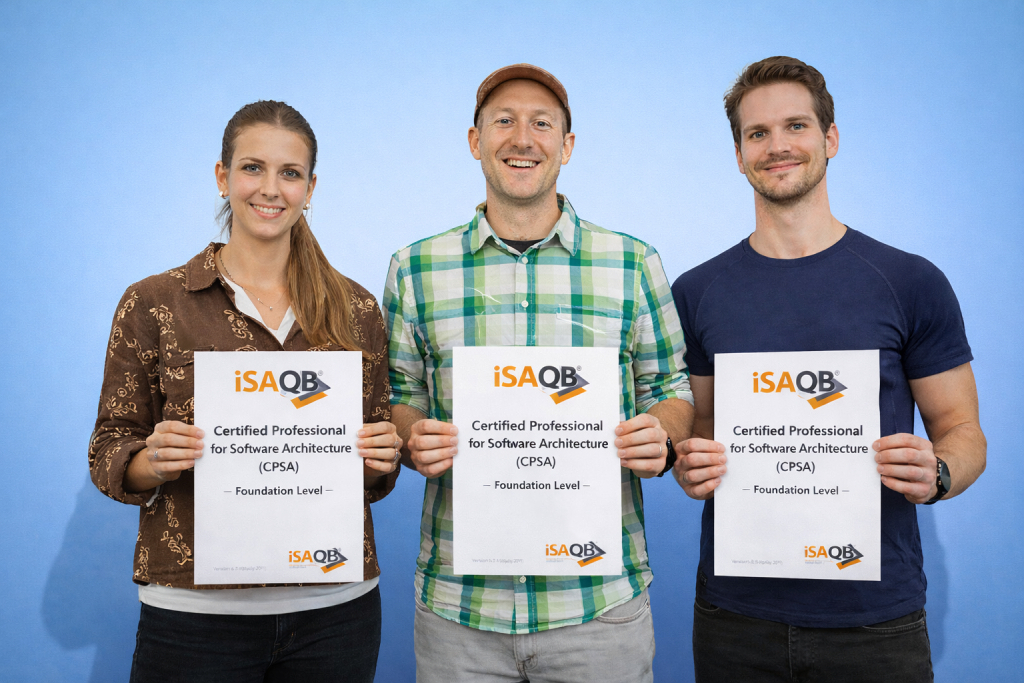
Completes your preparation for the official iSAQB® Foundation Level exam.
Make the career-building decision to build a strong foundation
This part-time, four-week course prepares you for the official iSAQB® CPSA-F certification – without interrupting your day-to-day. It combines self-paced study with videos and exercises, live sessions, group tasks, and personal trainer feedback. A strong foundation for professionals stepping into architectural roles – and those ready to grow them.
For (emerging) architects
Ideal for those who contribute to technical decisions and want to develop clarity, structure, and shared understanding.
Fits into the real world
The format supports steady progress alongside day-to-day responsibilities – with guidance, interaction, and reflection.
Certification-ready
Completes your preparation for the official iSAQB® Foundation Level exam.
The Flexible Camp teaches you how to thoroughly understand, design, and communicate software architecture. You’ll learn to analyze requirements systematically, develop architectural concepts methodically, and communicate technical decisions with clarity and transparency. Throughout the training, you’ll apply your knowledge to practical examples – creating a direct connection to real-world project situations.
Chapter 1: Structure & Foundations
Understand what constitutes good software architecture – and how to design systems that are clear, modular, and adaptable.
Why software architecture is necessary
Architecture definitions (including the iSAQB definition)
Tasks and responsibilities of software architects
Steps to designing good architectures
Chapter 3: Architecture documentation
Design robust systems with modules, components, and interfaces – transparent and flexible in design
Goals and benefits of architecture documentation
Architecture views & UML diagrams
Best practices for diagrams and artifacts
How to document "correctly"
Chapter 2: Developing architectures
Design robust systems with modules, components, and interfaces – transparent and flexible in design
Evaluate and improve architectures systematically – for sustainable quality and maintainable systems
Technical debt & maintainability
Quality models (ISO 25010)
Utility Trees & Quality Scenarios
ATAM & other evaluation Methods
What you’ll take away – Your training content
The Flexible Camp teaches you how to thoroughly understand, design, and communicate software architecture. You’ll learn to analyze requirements systematically, develop architectural concepts methodically, and communicate technical decisions with clarity and transparency. Throughout the training, you’ll apply your knowledge to practical examples – creating a direct connection to real-world project situations.
Chapter 1: Structure & Foundations
Understand what constitutes good software architecture – and how to design systems that are clear, modular, and adaptable.
Why software architecture is necessary
Architecture definitions (including the iSAQB definition)
Tasks and responsibilities of software architects
Steps to designing good architectures
Chapter 3: Architecture documentation
Design robust systems with modules, components, and interfaces – transparent and flexible in design
Goals and benefits of architecture documentation
Architecture views & UML diagrams
Best practices for diagrams and artifacts
How to document "correctly"
Chapter 2: Developing architectures
Design robust systems with modules, components, and interfaces – transparent and flexible in design
Our iSAQB®-accredited trainers design the training courses to be hands-on, oriented towards real problems and successful projects.
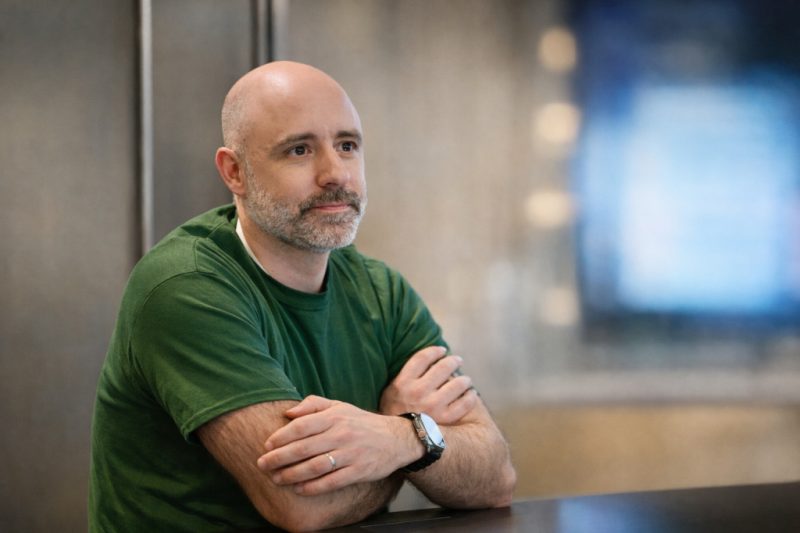
Richard Wallintin
Richard wants software to simply work. He’s convinced this is best achieved through independent teams who rigorously measure the success of their products. As an architect, consultant, and coach, he values passion, courage, and technical excellence. And of course, Richard always writes the test first.
Markus Geiger
Markus Geiger is a project manager, trainer, and architect at WPS – Workplace Solutions. He studied Communications Engineering in Esslingen am Neckar and Distributed Computing Systems Engineering at Brunel University in London. He has more than 25 years of experience as a software developer, software architect, and coach, working on numerous successful projects in the fields of industry, logistics, and retail. In addition to software architecture, Markus has a particular interest in IT security and the Secure Development Lifecycle.
Trainer
Our iSAQB®-accredited trainers design the training courses to be hands-on, oriented towards real problems and successful projects.
Richard Wallintin
Richard wants software to simply work. He’s convinced this is best achieved through independent teams who rigorously measure the success of their products. As an architect, consultant, and coach, he values passion, courage, and technical excellence. And of course, Richard always writes the test first.
Key information at a glance
4-week blended learning format – completely online
Combination of e-learning, group exercises & live sessions
Individual learning pace with trainer feedback
Direct communication via chat and video conferencing
A practical case study serves as a common thread throughout all chapters.
Exam preparation for the iSAQB® Foundation Level
What you can count on – Our promises to you
Based on the latest iSAQB® CPSA-F curriculum (2025)
Tailored preparation for the official certification exam
Personal feedback from experienced iSAQB® trainers
High-quality learning materials and videos
Designed for professionals – flexible, structured, and interactive
Format, experience & structure
4-week online training – flexible and part-time alongside your job
Weekly structure with videos, readings, exercises & live sessions
Group tasks and discussion – real interaction instead of passive learning
Personal trainer support via chat & live meetups
Practical case study as a common thread throughout all chapters
About iSAQB® & CPSA®
CPSA® – Certified Professional for Software Architecture Developed by the non-profit iSAQB®, the CPSA® certification is the internationally recognized standard for software architecture training. It proves your skills in designing, evaluating, and communicating modern software architectures – and helps you stand out as an IT professional.
Stay informed
Our newsletter provides regular updates on modules, trainers, specials and everything else you need to know about software architecture.
Foundation Camp Dates
Foundation Camp Dates
Software Architecture Camp Foundation Flexible September 14 – October 9, 2026 | Online
We offer special conditions for groups of five or more participants. If you have any questions or would like further information, please do not hesitate to contact me. I am looking forward to hearing from you!
Mit dem 4- oder 5-Tages-Ticket erhältst du zusätzlich 12 Monate lang Zugang zu Online-Workshops, Tutorials und über 10.000 Artikeln auf unserer Trainingsplattform entwickler.de. NEU: Unsere AI-Technologie kuratiert die für dich wichtigsten Inhalte in Echtzeit
Tutorials
Strukturiertes Lernen mit hoher Wissensdichte.
Live
Interaktive Echtzeit Weiterbildung vor Ort und Remote.
Bibliothek
Umfangreiches Software Know-how überall und jederzeit verfügbar.
Bist du schon Fullstack-Abonnent:in? Dann sichere dir jetzt bis zu 25 % Rabatt auf dein Ticket.