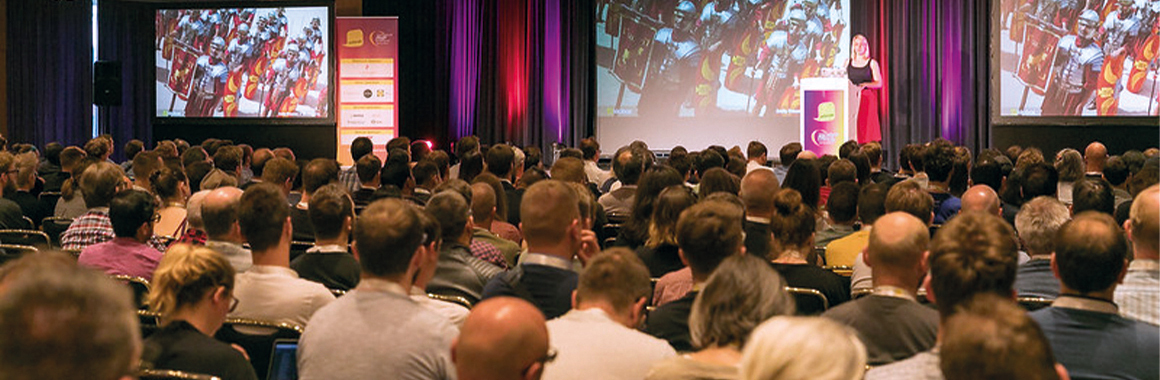
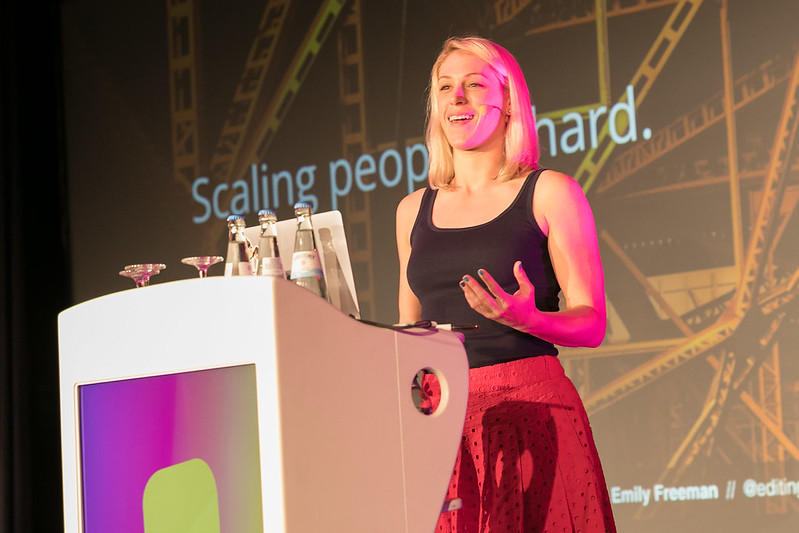
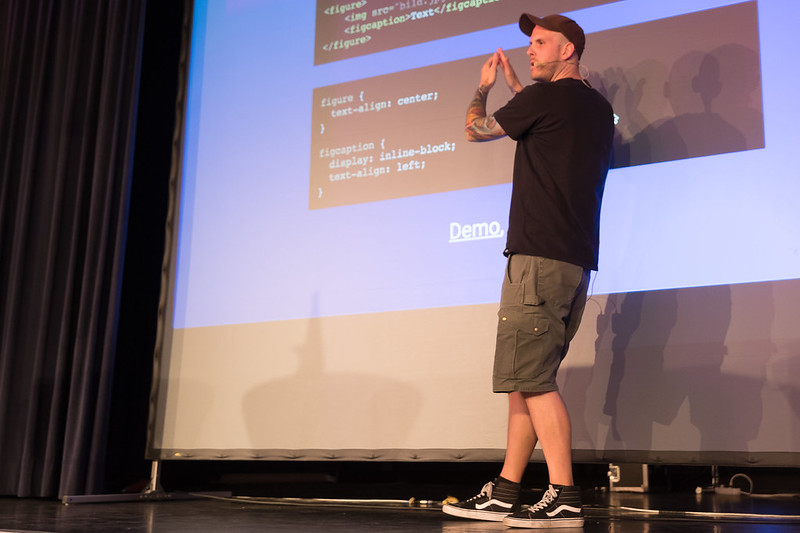
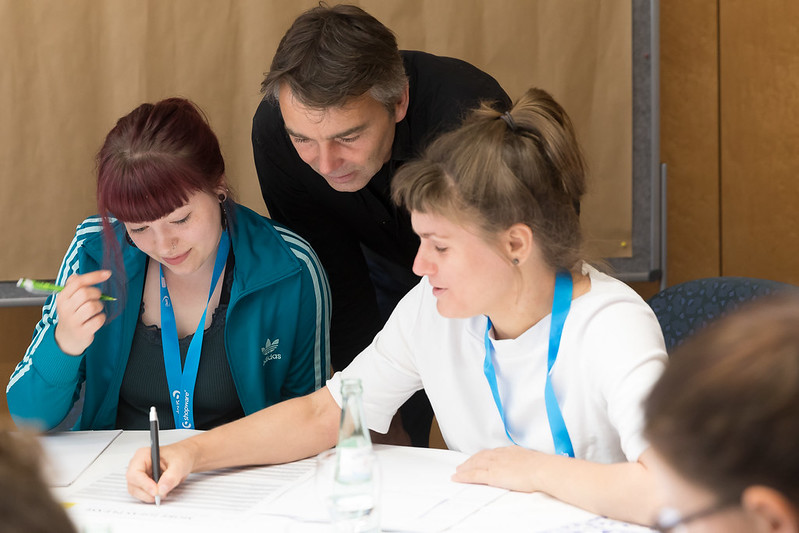
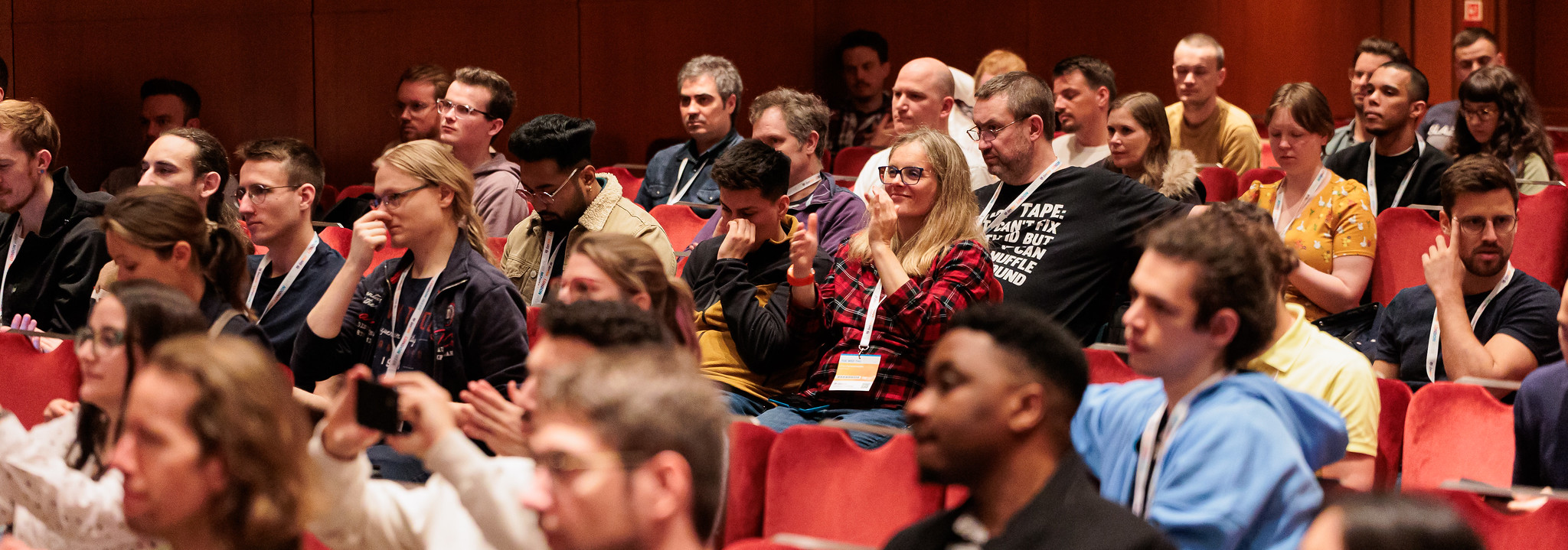
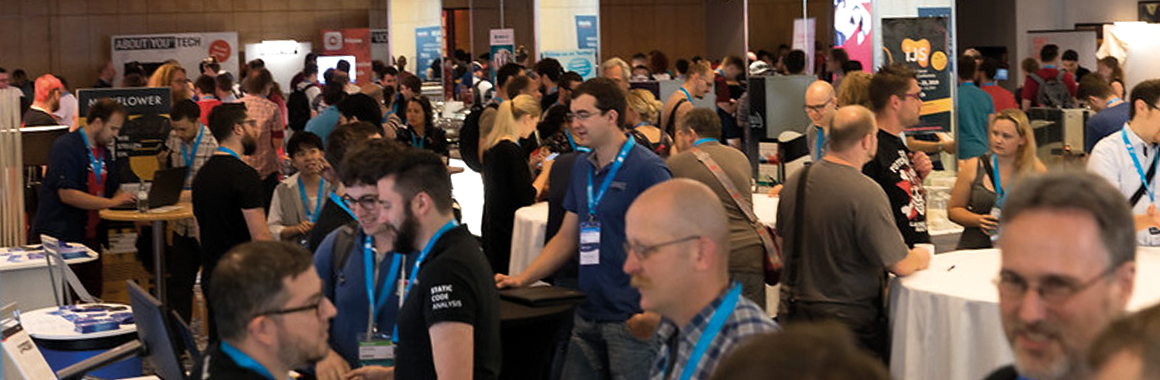
Different formats for different depths — from keynotes and sessions to in-depth workshops.
Curated around interaction
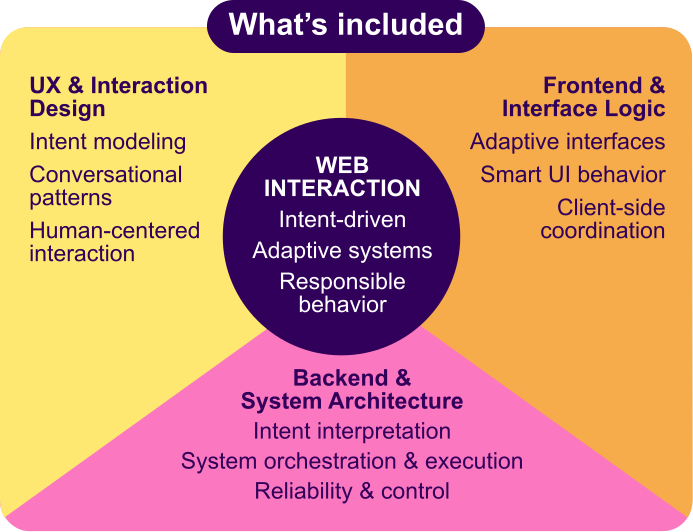
A shared focus on how intent becomes interaction — from UX to web architecture.
Multi-discipline learning
Design, frontend, backend, and product thinking — treated as one system, not isolated roles.
Why Intent-Driven Web Interaction — and why now?
AI is not just adding new capabilities — it is changing fundamentally how interaction works. From predefined flows to adaptive, conversational, and intent-driven systems — demanding new approaches to design, build, and operation.
⚖️ Interaction starts with intent
Users no longer begin with navigation or predefined flows. They start with goals, questions, and partial ideas — and expect systems to interpret, guide, and refine interaction as understanding evolves.
🚀 Human-centered interaction changes
Conversational and adaptive interfaces increase flexibility at the surface. At the same time, structure and responsibility move deeper into systems, architecture, and orchestration.
🔐 Architecture becomes part of the experience
Where intelligence lives shapes how interaction feels. Latency, transparency, recoverability, and trust are influenced by architectural decisions across frontend, backend, and orchestration layers.
🎯 AI moves into production workflows
AI-driven interaction is no longer experimental. It is becoming part of real products, real user journeys, and business-critical systems — with visible consequences when behavior is unclear or unreliable.
Why Intent-Driven Web Interaction — and why now?
AI is not just adding new capabilities — it is changing fundamentally how interaction works. From predefined flows to adaptive, conversational, and intent-driven systems — demanding new approaches to design, build, and operation.
⚖️ Interaction starts with intent
Users no longer begin with navigation or predefined flows. They start with goals, questions, and partial ideas — and expect systems to interpret, guide, and refine interaction as understanding evolves.
🚀 Human-centered interaction changes
Conversational and adaptive interfaces increase flexibility at the surface. At the same time, structure and responsibility move deeper into systems, architecture, and orchestration.
🔐 Architecture becomes part of the experience
Where intelligence lives shapes how interaction feels. Latency, transparency, recoverability, and trust are influenced by architectural decisions across frontend, backend, and orchestration layers.
🎯 AI moves into production workflows
AI-driven interaction is no longer experimental. It is becoming part of real products, real user journeys, and business-critical systems — with visible consequences when behavior is unclear or unreliable.
Designed for UX Professionals, Frontend and Backend Engineers, and Software Architects Shaping a New Class of Web Interaction — from Design to Operation
Interaction is becoming a shared capability
User intent, UI behavior, and system logic are closely linked. Decisions in UX, frontend, or backend directly affect how interaction behaves in practice.
From isolated decisions to shared capability
User intent, interface behavior, and system execution are tightly connected — and decisions in one area increasingly shape outcomes in the others. Designing interaction as a shared capability helps teams make these dependencies explicit, instead of discovering them late through friction, rework, or loss of trust.
Better decisions through shared understanding
Bringing these perspectives together helps teams reason about interaction as a shared responsibility — not a handoff between roles.
You’ll learn how to:
Align UX intent with frontend behavior and backend execution/li>
Avoid mismatches between interaction design and system constraints
Design interaction that remains understandable, trustworthy, and under control as systems evolve
Interaction is becoming a shared capability
User intent, UI behavior, and system logic are closely linked. Decisions in UX, frontend, or backend directly affect how interaction behaves in practice.
From isolated decisions to shared capability
User intent, interface behavior, and system execution are tightly connected — and decisions in one area increasingly shape outcomes in the others. Designing interaction as a shared capability helps teams make these dependencies explicit, instead of discovering them late through friction, rework, or loss of trust.
Better decisions through shared understanding
Bringing these perspectives together helps teams reason about interaction as a shared responsibility — not a handoff between roles.
You’ll learn how to:
Align UX intent with frontend behavior and backend execution/li>
Avoid mismatches between interaction design and system constraints
Design interaction that remains understandable, trustworthy, and under control as systems evolve
One topic. One shared perspective.
As web interaction becomes adaptive, conversational, and intent-driven, responsibility no longer sits in one role or layer. This week brings together the people who shape how users experience and trust intelligent systems — across disciplines, end to end.
Your end-to-end perspective
Curated sessions and workshops from across the week, focused on web interaction
Cross-disciplinary insights from UX, frontend, backend, and architecture perspectives
Perspectives from different conference programs and formats, combined into one coherent experience
No context switching or track comparison — relevant content is brought together for you
One topic. One shared perspective.
As web interaction becomes adaptive, conversational, and intent-driven, responsibility no longer sits in one role or layer. This week brings together the people who shape how users experience and trust intelligent systems — across disciplines, end to end.
Your end-to-end perspective
Curated sessions and workshops from across the week, focused on web interaction
Cross-disciplinary insights from UX, frontend, backend, and architecture perspectives
Perspectives from different conference programs and formats, combined into one coherent experience
No context switching or track comparison — relevant content is brought together for you
Multiple formats designed for different learning depths — from 45-minute conference sessions to 2-day bootcamps.
One week. Three levels of depth.
📅 Conference
June 9 – 11, 2026
Focused sessions across multiple perspectives. Build a shared understanding of how web interaction is changing — including key patterns, trade-offs, and design decisions discussed by experienced practitioners.
🔧 Power Workshops
June 8 & 12, 2026
6-hour deep dives that move from concepts to concrete approaches. Explore interaction patterns, architectural decisions, and system behavior in depth — and discuss how they apply to real products and teams.
🎓 2-Day Bootcamp
June 11 – 12, 2026
An immersive, hands-on bootcamp focused on building AI-first web interaction. Learn how to design, build, and deploy smart interfaces, AI agents, and real-time AI interactions using TypeScript and modern frontend frameworks — with a strong focus on user experience, interaction design, and product thinking.
Webinale Web Week core topics – the trends shaping digital in 2026
A shared mental model — and the capability to design, build, and operate web interaction consciously as it continues to evolve.
A clear mental model for modern interaction
A shared understanding of how intent-driven, adaptive interaction works — and how responsibilities shift across UX, frontend, backend, and system architecture.
Design decisions that scale beyond the UI
Guidance on how interaction design choices affect system behavior, constraints, and trust — not just screens, but the systems behind them.
Where intelligence belongs — and where it doesn’t
Clarity on how to distribute intelligence across frontend, backend, orchestration, and AI components without creating fragile or opaque systems.
Operating AI-augmented interaction in production
Patterns for keeping interaction predictable, explainable, and controllable as AI becomes part of real user journeys and business-critical workflows.
Cross-discipline alignment without friction
Shared language and perspectives that help UX, frontend, backend, and architecture teams make better decisions together — without constant coordination overhead.
Actionable orientation, not rigid recipes
Concrete examples, patterns, and reference approaches you can adapt to your context — without locking you into a single solution or toolchain.
What you'll take back
A shared mental model — and the capability to design, build, and operate web interaction consciously as it continues to evolve.
A clear mental model for modern interaction
A shared understanding of how intent-driven, adaptive interaction works — and how responsibilities shift across UX, frontend, backend, and system architecture.
Design decisions that scale beyond the UI
Guidance on how interaction design choices affect system behavior, constraints, and trust — not just screens, but the systems behind them.
Where intelligence belongs — and where it doesn’t
Clarity on how to distribute intelligence across frontend, backend, orchestration, and AI components without creating fragile or opaque systems.
Operating AI-augmented interaction in production
Patterns for keeping interaction predictable, explainable, and controllable as AI becomes part of real user journeys and business-critical workflows.
Cross-discipline alignment without friction
Shared language and perspectives that help UX, frontend, backend, and architecture teams make better decisions together — without constant coordination overhead.
Actionable orientation, not rigid recipes
Concrete examples, patterns, and reference approaches you can adapt to your context — without locking you into a single solution or toolchain.
Who should attend
If you design, build, or operate modern web interaction, this week is designed for you.
As web interaction becomes adaptive, conversational, and intent-driven, responsibility no longer sits in one role or layer. This week brings together the people shaping how users experience and trust intelligent systems — end to end.
UX & interaction designers → design intent-driven, conversational, and adaptive user experiences that feel natural, trustworthy, and usable — even as systems become more intelligent.
Frontend engineers→ build smart interfaces and client-side logic that integrate AI capabilities without compromising performance, transparency, or user control.
Backend engineers & architects→ design systems that interpret intent, orchestrate behavior, and keep interaction predictable, explainable, and resilient in production.
Product & technical leaders→ align UX, frontend, and backend teams around shared interaction principles and make informed decisions in a rapidly evolving landscape.
Teams building AI-augmented products→ move beyond experimentation and understand how AI-driven interaction behaves in real user journeys and real business contexts.
Anyone responsible for user-facing system behavior→ gain clarity on how interaction, architecture, and responsibility come together as AI becomes part of everyday products.
Who should attend
If you design, build, or operate modern web interaction, this week is designed for you.
As web interaction becomes adaptive, conversational, and intent-driven, responsibility no longer sits in one role or layer. This week brings together the people shaping how users experience and trust intelligent systems — end to end.
UX & interaction designers → design intent-driven, conversational, and adaptive user experiences that feel natural, trustworthy, and usable — even as systems become more intelligent.
Frontend engineers→ build smart interfaces and client-side logic that integrate AI capabilities without compromising performance, transparency, or user control.
Backend engineers & architects→ design systems that interpret intent, orchestrate behavior, and keep interaction predictable, explainable, and resilient in production.
Product & technical leaders→ align UX, frontend, and backend teams around shared interaction principles and make informed decisions in a rapidly evolving landscape.
Teams building AI-augmented products→ move beyond experimentation and understand how AI-driven interaction behaves in real user journeys and real business contexts.
Anyone responsible for user-facing system behavior→ gain clarity on how interaction, architecture, and responsibility come together as AI becomes part of everyday products.
Location
Maritim ProArte Hotel Berlin
Friedrichstraße 151, 10117 Berlin
The Maritim ProArte Hotel Berlin is located in the heart of Berlin, directly on the famous Friedrichstraße and in walking distance to the Museum Island, the Reichstag, and the Brandenburg Gate.
The Maritim ProArte Hotel Berlin is located in the heart of Berlin, directly on the famous Friedrichstraße and in walking distance to the Museum Island, the Reichstag, and the Brandenburg Gate.